- Candid Conversations
- Posts
- Candid Conversation Newsletter: Friendship and the Spaces Between
Candid Conversation Newsletter: Friendship and the Spaces Between
How Friends Shape Us, and How We Shape Ourselves

The Black Dot
September 07, 2025

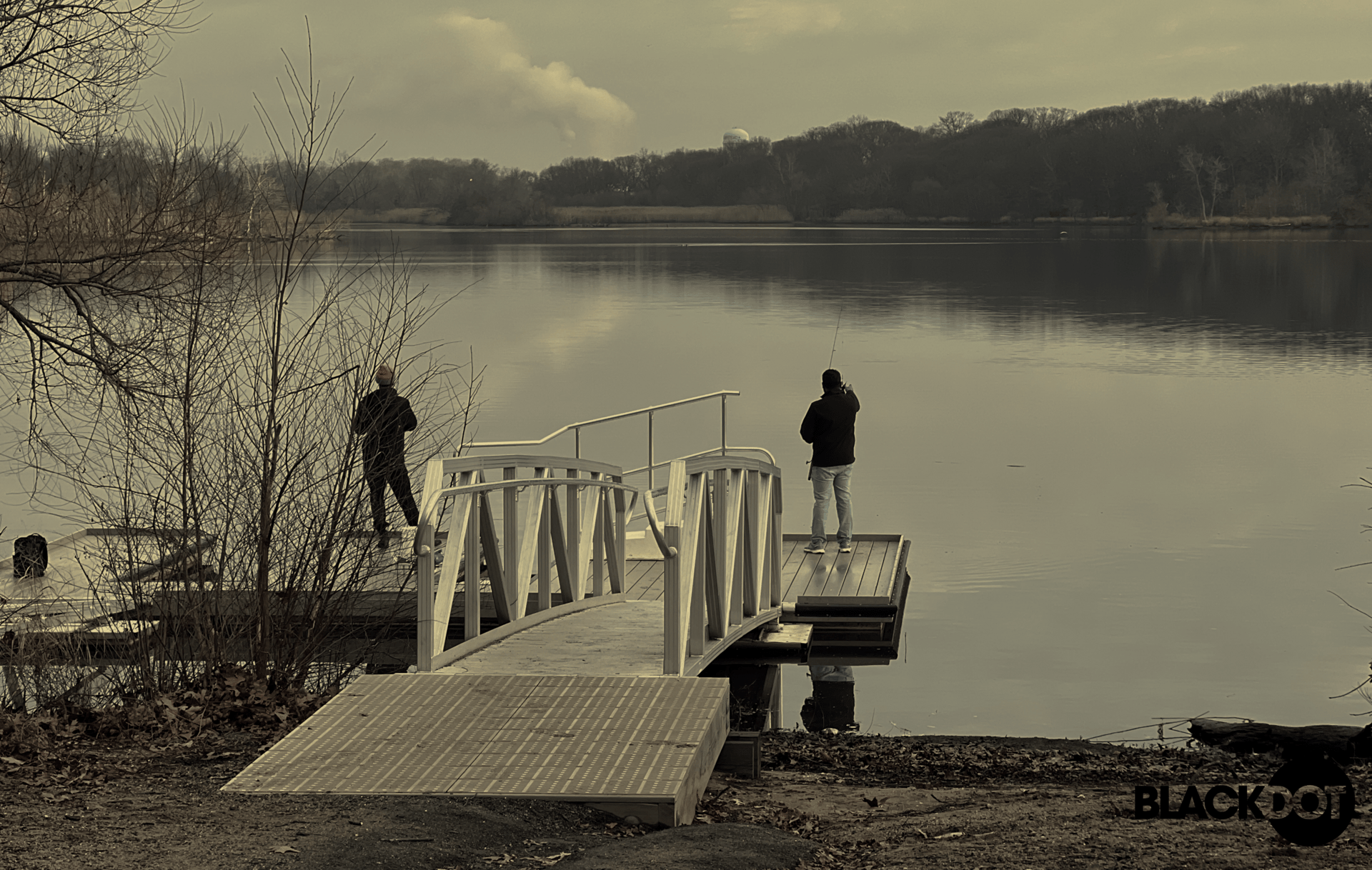
The space between can be the bridge on the way back to yourself.
Why friendship bends, and what it teaches us about ourselves.
I recently reconnected with a friend after some time away. We were catching up when, with a sudden shift in tone, they said, “You have a lot of friends.” I had never thought of myself that way. My demeanor has always been stoic, what my Whale-minded friend jokingly calls a “serious resting face.” I quickly replied, “No, I don’t.” But they pressed: “You know a lot of people.”
They were right. I do know a lot of people. That exchange still lingers. What does it mean to “have a lot of friends”? And what is the difference between friendship and simply knowing many people?
Holding On with Intention 🏹
Relationships have always mattered to me. I’m still close to friends from as far back as pre-K. Some friendships stay constant, others ebb and flow, light and easy or heavy with weight.
Over time, I have learned that each connection asks for something different. With some, you give more than you receive. With others, reciprocity comes naturally. As a child, I imagined my closest friends and I sprinting through youth together, coasting gracefully into old age. I held the image of us sitting in a classroom, or walking home, convinced we would always be side by side.
I once shared this with a childhood friend. His reply was blunt: “That might not happen.” A sobering truth.
Growing Up Outside 🪴
Maybe my affinity for friendship came from growing up with two older sisters, nine and eight years ahead of me. We shared little in common, for obvious reasons, so I turned outward. Any free time became a circuit of friends and cousins, my cousins' house being less than forty meters away made it easy. My parents left for work, and I left soon after too, sometimes waiting for them to turn the corner. I returned just minutes before they came home, so as not to get in trouble for leaving the yard.
I moved between pockets of friends: cooking in the woods, cricket companions, football teammates, church acquaintances. Each group was different, teaching me how people could be similar in presence but distinct in essence. Over time, some drifted away, some migrated to Canada, the U.S., or England, while others stayed close, though changed.
Circles and Distance ↪️
I now think of relationships as concentric circles. At the center are the innermost bonds, the safe spaces marked by trust, grace, empathy, curiosity, and accountability. These are relationships of depth, built on what matters most.
The next circle holds what I call bredrins or sistrins, connections not bound by blood but by shared substance, tested by time and sharpened by space lived together. Beyond that are wider rings: friends, colleagues, acquaintances, neighbors. Some connections come from time, others from proximity. Each carries its own weight.
But circles are not always mutual. You may place someone close to your center, only to discover you sit on their outer edge. At times, I have carried the weight of that imbalance.
Letting Go of Expectations 💨
When I was younger, I thought friendship itself was a virtue, a noble bond held together by unspoken principles. But longevity alone, the idea of “we have known each other forever,” does not equal depth.
Church friends were just that, church friends. They did not care for cricket or football, and that was fine. Eventually, I stopped putting people on pedestals they didn’t ask to be on, and expecting them to be more than they offered. Letting go of those expectations has been freeing. It allows me to see friendships as they are, not as I once wished them to be.
The Cost of Friendship ⚖️
There is a quiet danger in wanting to be everyone’s friend. On the surface, it seems kind, generous, even noble. But beneath it, there is often a hunger for validation, the need to be accepted in every circle we enter.
The trouble is that when you stretch yourself too thin, you begin to lose sight of who you are. Friendships built on approval or convenience ask you to perform, to adjust, to be different things in different places. I remember laughing at jokes I didn’t find funny, or saying yes to plans I didn’t have the energy for, just to avoid slipping out of a circle. Bit by bit, you become many versions of yourself, but rarely the one that feels most true.
Friendship, at its best, requires boundaries. It asks us to say no, to let some circles remain at a distance, and to choose depth over proximity. Because if every relationship is treated as equally close, none of them are given the space to grow into something lasting.
The one who seeks to be a friend to everyone can certainly be a danger to themselves.
When Life Changes 🧬
Narrowing your circles, or refusing to be everyone’s friend, can feel lonely. But perspective shifts matter.
What if you were one of those who left everything familiar behind and had to form new relationships in a place with different rules of belonging? Many of my friends did just that in Canada, the U.S., and England. Assimilation meant learning new languages of culture, humor, faith, or even silence. What once came naturally at home had to be renegotiated abroad. Friendship in those spaces can feel fragile at first, stitched together by convenience rather than history. You join new circles but carry old ones in memory, overlapping, never fully merging. As the years pass, identity, culture, and distance reshape the weight of your connections.
We learn then that friendship is not static. It bends with context.
It is not only about who we are to each other, but also about where we are, what culture surrounds us, and how much of ourselves we can bring forward.
With time, we come to realize that some bonds deepen across oceans, while others dissolve.
Both are part of the truth.
Between Knowing and Being Known 📏
Maybe friendship has never been about time at all. Maybe it is about how we carry one another through the spaces in between, and coming into the awareness that those spaces are not empty. They hold trust, memory, and presence. But before we can hold that for others, we have to learn how to hold it for ourselves.
True Reflections
I’ll end by saying this. As we think about our circles, maybe we should ask ourselves: Where are we giving too much? Where are we holding back? Where are we truly known? And are we truly open to the truth of how we show up for others? Or better yet, are we truly open to the truth of how we’re perceived by the ones in our circles?
